
Categories
Home Buying Process, Home Buying Strategies, Home Tips, New ConstructionPublished September 25, 2026
What Are the Hidden Costs of Buying a New Construction Home in Houston?

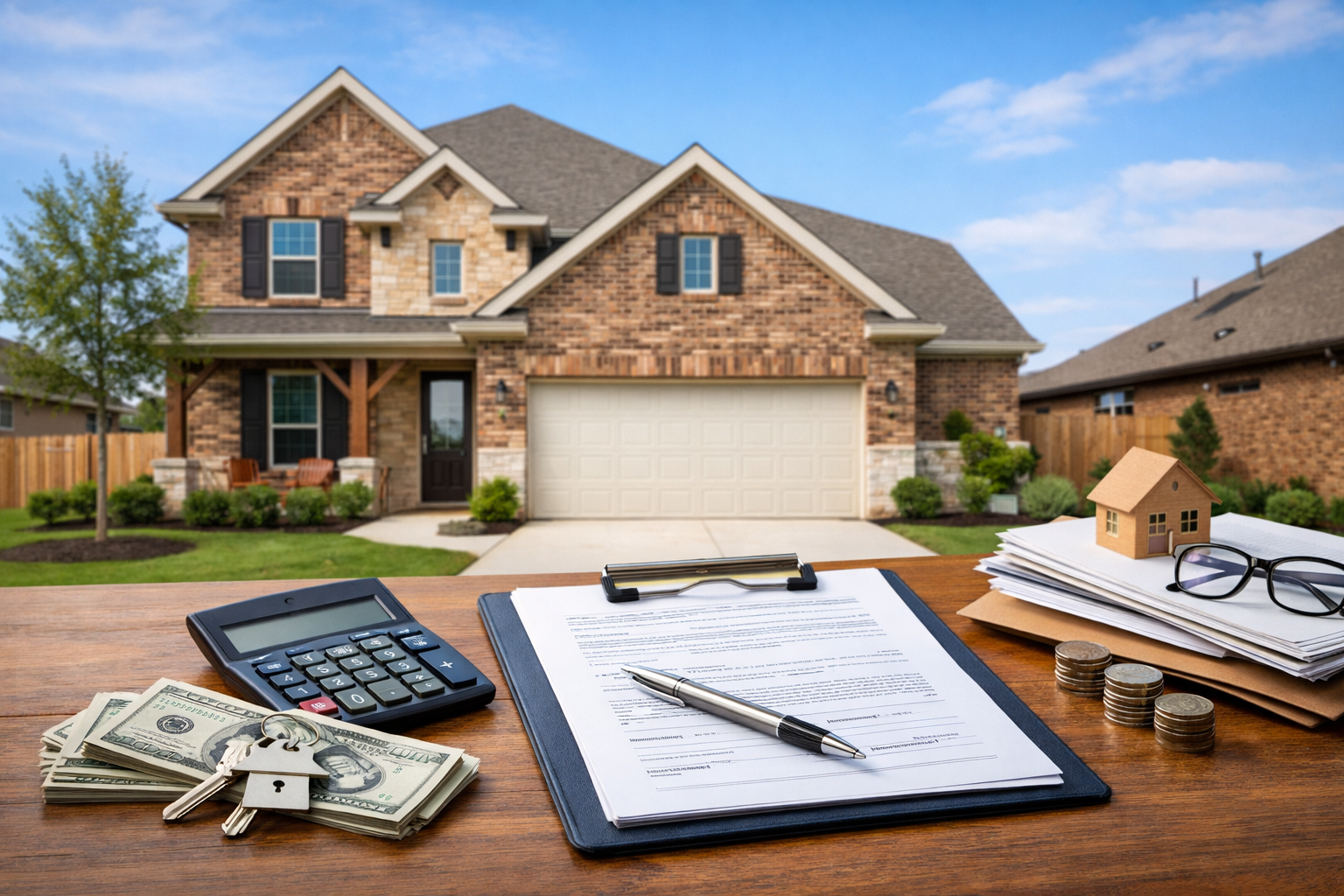
The hidden costs of buying a new construction home in Houston often include lot premiums, structural and design-center upgrades, deposits, earnest money, option fees where applicable, closing costs, lender-related expenses, rate-lock fees or extensions, higher property taxes after completion, HOA or community assessments, MUD or PID charges, insurance, flood and drainage due diligence, landscaping, appliances, window coverings, fencing, garage storage, moving costs, inspections, warranty-related out-of-pocket items, and ongoing maintenance reserves. The total can vary significantly based on the builder, community, contract terms, loan structure, and the specific property.
Many buyers assume a new construction home comes with fewer surprise expenses than a resale home. In reality, the purchase price is often only the starting point. Houston-area new-construction buyers can face a long list of costs that may not be obvious during the first model-home visit or online search.
If you are planning to buy a newly built home in Houston, the smartest approach is to budget beyond the base price, verify what is included in writing, and confirm deadlines and fees with the builder, lender, title company, insurer, and other qualified professionals before you commit.
Why new construction costs are not always obvious
Builders typically advertise a base price for a home plan, but the final amount due can change based on the homesite, selected options, financing terms, timing, and community-specific charges. Some items are rolled into the contract price, while others are paid before closing, at closing, or shortly after move-in.
That is why buyers should avoid assuming that one builder, one neighborhood, or one contract works the same as another. Costs can vary by builder, community, contract, loan, and property.
1. Lot premiums
A lot premium is an added charge for a homesite with features the builder considers more desirable. In Houston-area communities, that can include cul-de-sac placement, water views, greenbelt adjacency, oversized lots, corner lots, or locations with more privacy.
Lot premiums may not be obvious when you first compare floor plans because two identical homes can have different total prices depending on the lot. Ask for the lot premium in writing and confirm whether it is already included in the quoted price.
2. Structural upgrades
Structural upgrades are changes to the home itself, such as an extended patio, additional bedroom, media room, larger shower, extra garage bay, higher ceilings in certain areas, or alternate kitchen layout. These selections can materially increase the contract price.
Because structural choices are often made early in the process and may have strict deadlines, buyers should review upgrade pricing carefully before signing change approvals. Missing a deadline can limit your options, while adding too many upgrades can affect affordability and appraisal risk.
3. Design-center upgrades and finish selections
Design-center upgrades can include flooring, countertops, cabinets, tile, lighting, plumbing fixtures, backsplashes, stair details, paint upgrades, and smart-home features. Model homes often showcase upgraded finishes that are not included in the base price.
Before assuming a home will look like the model, ask for the standard-feature sheet and compare it against the selections you actually want. Small upgrades across multiple categories can add up quickly.
4. Deposits, earnest money, and option fees where applicable
New construction contracts may require deposits at signing and additional deposits for upgrades or change orders. Depending on the transaction structure and contract form, earnest money may also be required. In some situations, an option fee or similar fee may apply, but practices vary and not every builder transaction uses the same framework.
Buyers should confirm:
- How much is due upfront
- Whether deposits are refundable, partially refundable, or nonrefundable
- When additional deposits are due
- What happens if financing changes or the buyer cancels
- Whether any option period or similar review period applies
Because these terms can differ significantly, review the contract carefully with qualified professionals before paying funds.
5. Closing costs
Closing costs for a new construction home can include lender fees, appraisal fees, credit report fees, underwriting charges, title-related charges, escrow setup, prepaid taxes, prepaid insurance, recording-related charges, and other settlement costs. Even when a builder offers incentives, those incentives may apply only if you use a preferred lender or title company, and they may not cover every closing expense.
Ask for a detailed loan estimate and a clear explanation of what incentives can and cannot be used for. A large incentive can still leave meaningful out-of-pocket costs at closing.
6. Preferred-lender incentives
Preferred-lender incentives can be valuable, but buyers should evaluate the full financing picture rather than focusing only on the credit amount. A lender credit may be paired with an interest rate, fee structure, or lock terms that differ from other options.
That does not mean the incentive is bad. It means buyers should compare:
- Interest rate
- APR
- Lender fees
- Points
- Rate-lock terms
- Cash needed at closing
- Monthly payment impact
The best overall deal depends on the loan, timeline, and your financial goals.
7. Rate-lock considerations and extension costs
New construction timelines can be longer than resale timelines, which makes rate-lock strategy especially important. Some buyers lock early for certainty, while others wait. Depending on the lender and market conditions, a longer lock period may cost more, and lock extensions may involve additional fees if construction is delayed.
Ask the lender:
- How long the initial lock lasts
- Whether float-down options exist
- What happens if the builder completion date changes
- How much an extension costs, if needed
These details can affect both your closing cash and your long-term payment.
8. Property taxes after completion
One of the most misunderstood costs in new construction is property tax exposure after the home is completed. Early estimates may be based on vacant land, partial improvements, prior-year values, or preliminary assumptions that do not reflect the eventual assessed value of the finished home.
In Houston-area communities, buyers should ask for a realistic tax estimate based on the completed property and applicable taxing authorities. This is especially important when budgeting monthly escrow payments. A payment that looks manageable during pre-approval can change once taxes are fully assessed.
9. HOA fees, MUD charges, and PID assessments
Community-related costs can extend beyond a standard HOA fee. Depending on the location, buyers may also encounter MUD charges, PID assessments, or other community-specific obligations. These can affect both monthly affordability and long-term ownership costs.
Before signing, request documentation showing:
- Current HOA dues
- What the HOA covers
- Whether dues can change
- Whether the property is in a MUD or PID
- How those charges appear on tax bills or other statements
10. Homeowners insurance and flood-related considerations
Insurance costs for a new construction home can vary based on location, coverage choices, deductible structure, roof materials, claim environment, and whether flood insurance is required or recommended. Buyers in the Houston area should not assume that a newer home automatically means minimal insurance expense.
It is wise to obtain insurance quotes early and ask specifically about:
- Homeowners coverage
- Wind or hail deductibles
- Flood insurance requirements
- Optional flood coverage even if not required
- Water backup or drainage-related endorsements where relevant
11. Floodplain, drainage, and site due diligence
Flood and drainage due diligence matters in Greater Houston. Even if a home is newly built, buyers should independently verify floodplain information, drainage patterns, detention features, lot grading, and any history or disclosures available for the area. A builder's marketing materials are not a substitute for independent verification.
Ask questions about:
- Whether the property is in a flood zone
- Whether flood insurance is required by the lender
- How the lot drains during heavy rain
- Whether there are easements, swales, or drainage features affecting use of the yard
- What warranties or responsibilities apply to grading and drainage issues
12. Landscaping and irrigation
Some new homes include basic landscaping, while others include only limited sod, minimal plantings, or no backyard improvements beyond required installation. Irrigation coverage can also vary. If you expect a finished outdoor space at move-in, verify exactly what is included.
Post-closing landscaping costs may include additional sod, trees, beds, edging, irrigation adjustments, drainage improvements, and ongoing lawn care equipment or service.
13. Appliances and utility-related add-ons
Not every builder includes the same appliance package. Buyers should confirm whether the home includes a refrigerator, washer, dryer, garage door opener, water softener loop, EV charging readiness, or other utility-related features they consider essential.
These items may seem minor compared with the purchase price, but replacing multiple missing items after closing can strain the move-in budget.
14. Window coverings
Window coverings are frequently overlooked in new construction budgeting. Blinds, shades, drapery, and specialty coverings for large or high windows can become a meaningful expense soon after move-in, especially if privacy and heat control are priorities.
15. Fencing and outdoor privacy
Fence inclusion varies by builder and community. Some homes include full fencing, some include partial fencing, and some require buyers to handle fencing later subject to HOA rules. If the backyard backs to a reserve, trail, or neighboring lot, privacy expectations should be discussed before closing.
Always verify whether fencing is included, who installs it, what materials are allowed, and whether there are timing restrictions.
16. Garage storage and organization
New homes often deliver a clean garage shell, but not necessarily the storage systems many buyers want. Shelving, overhead racks, cabinetry, wall organization, and floor coatings are common post-closing expenses that are easy to underestimate.
17. Moving and setup costs
Moving into a new construction home can involve more than hiring movers. Buyers may also pay for utility transfers, internet installation, packing supplies, temporary storage, cleaning, furniture delivery coordination, and time-off-related costs. If the completion date shifts, temporary housing or storage expenses may also arise.
18. Inspections during construction and before closing
Some buyers assume a new home does not need an independent inspection because it is brand new. Many buyers still choose to hire qualified inspectors for phases such as pre-drywall, final inspection, and warranty-period review, depending on the build stage and contract structure.
Inspection costs are another line item to budget for, and they can provide valuable documentation of issues that should be addressed before or after closing.
19. Warranties and out-of-pocket warranty issues
Builder warranties can be helpful, but buyers should read them carefully. Coverage periods, exclusions, claim procedures, and maintenance obligations vary. Some issues may be covered only if reported within a specific timeframe, while others may be excluded as homeowner maintenance items.
Ask for the warranty documents early and review:
- What is covered
- How long coverage lasts
- What voids coverage
- How to submit claims
- What routine maintenance the owner must perform
20. Maintenance reserves for a new home
Even a brand-new home benefits from a maintenance reserve. Filters, caulking, pest control, HVAC servicing, irrigation adjustments, drainage corrections, paint touch-ups, and seasonal upkeep can all create costs during the first year of ownership. New does not mean maintenance-free.
Practical budget checklist for Houston new-construction buyers
Use this checklist to build a more realistic budget before signing a contract:
- Base price of the home
- Lot premium
- Structural upgrades
- Design-center upgrades
- Deposits, earnest money, and any option-related fees where applicable
- Estimated closing costs
- Cash needed after builder or lender incentives
- Rate-lock costs or extension risk
- Realistic property tax estimate after completion
- HOA dues, MUD charges, PID assessments, or other community fees
- Homeowners insurance and flood insurance review
- Inspection costs
- Landscaping and drainage improvements
- Appliances not included by the builder
- Window coverings
- Fencing if not included
- Garage storage or organization
- Moving and utility setup costs
- Warranty-related out-of-pocket items
- Maintenance reserve after move-in
How buyers can reduce surprise costs
Buyers can reduce surprises by slowing down the review process and verifying details in writing. A practical approach includes comparing standard features against model-home finishes, requesting a full estimate of cash due before closing, reviewing tax and insurance assumptions independently, and understanding every deadline tied to selections, financing, and inspections.
It is also wise to confirm contract terms and community costs with the appropriate professionals rather than relying on assumptions. The builder, lender, title company, insurer, inspector, surveyor, and legal or tax professionals may each provide a different piece of the full cost picture.
FAQ: Hidden costs of buying a new construction home in Houston
What is the biggest hidden cost in a Houston new construction home purchase?
The biggest hidden cost is often the gap between the advertised base price and the true all-in cost after lot premiums, upgrades, closing costs, taxes, insurance, and move-in expenses are added.
Are builder incentives always the best deal?
No. Builder or preferred-lender incentives can be valuable, but buyers should compare the full loan terms, fees, rate, and cash-to-close impact before deciding.
Do new construction homes in Houston have higher property taxes?
They can result in higher tax bills than some buyers initially expect because early estimates may not reflect the completed home's eventual assessed value and all applicable taxing authorities.
Do I need an inspection on a brand-new home?
Many buyers still choose independent inspections on new construction homes because new does not guarantee defect-free construction, and inspections can help identify issues before or after closing.
Is flood insurance always required for a new construction home in Houston?
No. Flood insurance requirements depend on the property, lender, and flood-zone determination, but buyers should still evaluate flood risk and insurance options even when coverage is not required.
Are fences, appliances, and blinds usually included?
Not always. Inclusion varies by builder, community, and contract, so buyers should verify each item in writing rather than assuming it comes with the home.
Bottom line
Buying a new construction home in Houston can offer modern layouts, energy-efficient features, and fewer immediate repair concerns than some resale homes, but the total cost is rarely limited to the advertised base price. Hidden costs can appear before closing, at closing, and after move-in.
The most reliable way to protect your budget is to verify inclusions, deadlines, tax estimates, insurance assumptions, and contract terms with the builder, lender, title company, insurer, and qualified professionals before making final decisions.
Watch our Youtube Video
Get a free home valuation here
Visit our website here
Go to our YouTube Channel Here
Call or Contact us:
832-905-9501
mflores@vantagerec.com
Vantage Real Estate Group Powered by PLACE

Michael Flores
Owner/Lead Agent | Vantage Real Estate Group | Keller Williams Signature Realty
or another way