
Categories
Home Buying Process, Home Buying Strategies, Home Tips, New BuyersPublished November 6, 2026
How to Budget for Builder Upgrades as a First-Time Buyer

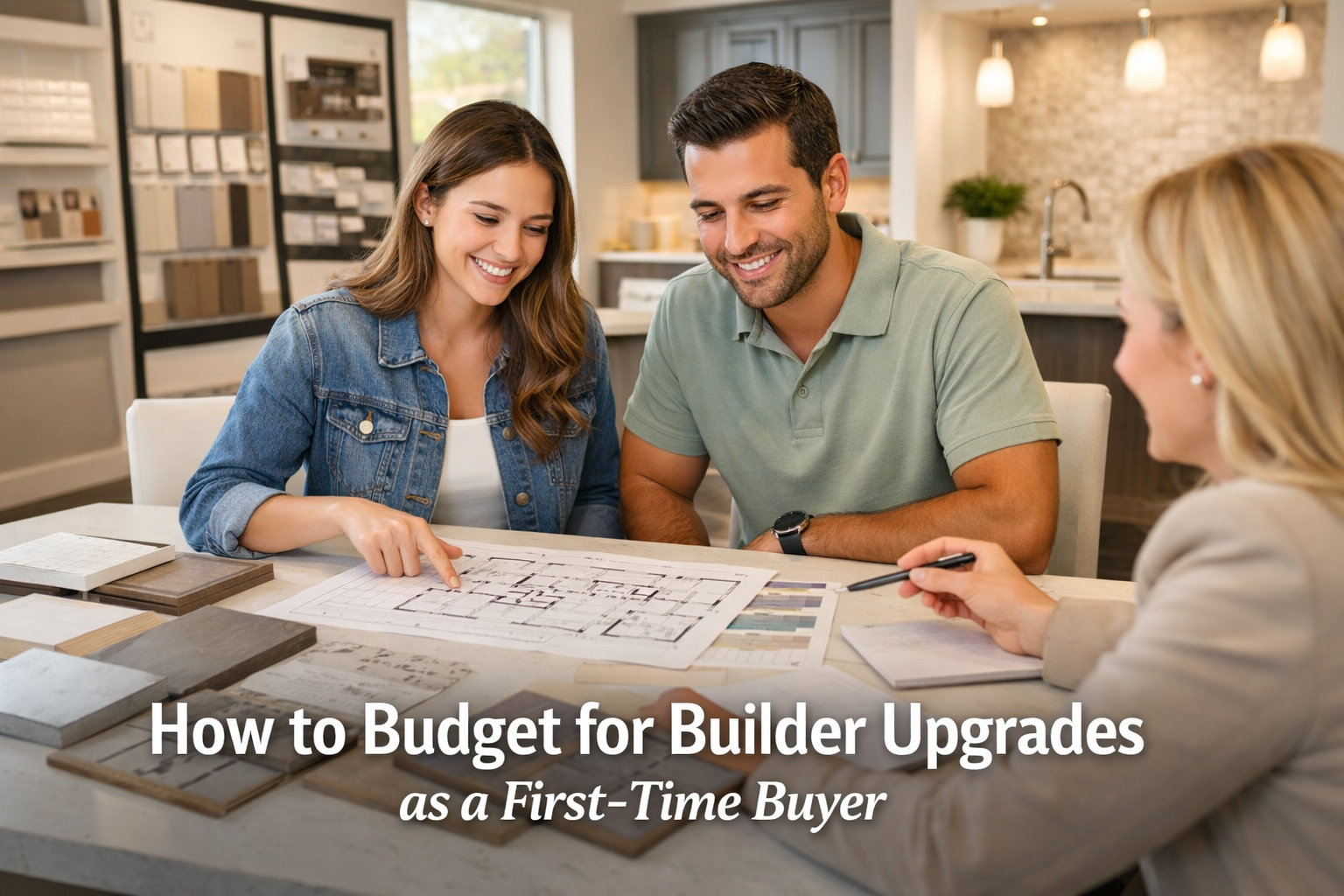
Buying a brand-new home can be exciting, especially for a first-time buyer. The model home looks polished, the design center feels full of possibilities, and every upgrade can seem like the one feature you do not want to miss. The challenge is that upgrade decisions can add up quickly, and it is easy to lose sight of your total budget before construction is even underway.
Start With an All-In Budget Before You Visit the Design Center
Before you choose flooring, cabinets, lighting, or lot options, decide how much you are comfortable spending on the home as a whole. That means looking beyond the base price and thinking about the full picture.
Your all-in budget may include:
- Base purchase price
- Lot premium, if any
- Structural options
- Design-center upgrades
- Closing costs and prepaid items
- Moving expenses
- Window coverings, appliances, or backyard work that may not be included
- Cash reserves after closing
Many first-time buyers make the mistake of focusing only on the monthly payment or only on the builder's base price. A better approach is to decide in advance how much room you want to leave for upgrades without putting pressure on your closing funds or emergency savings.
Know the Difference Between Structural Choices and Cosmetic Upgrades
Not every upgrade carries the same weight. Some decisions affect the layout, wiring, plumbing, or framing of the home. Others are mostly aesthetic and can be changed later.
Structural or pre-drywall choices often include:
- Additional bedrooms or bathrooms
- Extended patios or covered outdoor spaces
- Extra garage space or storage areas
- Electrical outlets, data wiring, and lighting placement
- Plumbing rough-ins for future sinks or utility spaces
- Higher ceilings or layout modifications, where offered
These items are often harder, more disruptive, or more expensive to add after the home is finished.
Cosmetic upgrades often include:
- Light fixtures
- Cabinet hardware
- Backsplashes
- Accent paint
- Some mirrors and decorative finishes
- Certain flooring upgrades, depending on the area
Cosmetic items may still matter, but they usually deserve a lower priority than features tied to the structure or function of the home.
Upgrades That Are Often Worth Stronger Consideration
Every buyer's priorities are different, but first-time buyers often benefit from focusing on upgrades that are difficult to add later or that improve how the home functions every day.
Examples may include:
- Kitchen layout improvements
- Additional recessed lighting in key living areas
- Extra electrical outlets in practical locations
- Prewiring for ceiling fans, security, or internet needs
- Shower upgrades that require plumbing or framing changes
- Covered patio extensions, if outdoor living matters to you
- Storage improvements built into the original plan
The goal is not to choose the most expensive package. It is to identify the items that would be messy, costly, or unrealistic to redo after move-in.
Upgrades That Can Often Wait Until After Closing
Some features feel urgent in the design center but can often be handled later with more flexibility. That does not mean they are unimportant. It means they may not need to be financed into the original purchase or chosen under builder deadlines.
Items that can sometimes wait include:
- Decorative light fixtures
- Cabinet pulls and knobs
- Custom paint
- Feature walls
- Some landscaping enhancements
- Garage storage systems
- Certain backsplash or mirror updates
For many first-time buyers, delaying a few cosmetic upgrades can protect cash reserves and reduce stress at closing.
Compare Builder Pricing With Post-Closing Alternatives
Builder upgrades can be convenient because they are installed before move-in and may be included in the purchase process. Still, convenience does not always mean the builder is the best value for every item.
When possible, compare:
- What the builder charges
- What a similar item might cost after closing
- Whether post-closing installation would be disruptive
- Whether the builder's version is tied to warranty or construction timing
For example, a prewired outlet or structural patio extension may make more sense during construction. A decorative dining-room light fixture may be easier to change later. The key is to compare function, timing, and total cost, not just the showroom appeal.
Understand Financing and Cash-to-Close Impacts
Upgrades can affect more than the sticker price. They may also affect your financing plan, your cash-to-close, and how much flexibility you have left after closing.
Ask early:
- Which upgrades are added to the contract price
- Which upgrades require separate deposits
- Whether certain selections must be paid for out of pocket
- How upgrades may affect your loan qualification or monthly payment
- How much cash you still need for closing costs, moving, and setup expenses
First-time buyers sometimes overfocus on getting the home to look perfect on day one and underprepare for the real costs that show up right after closing.
Watch for Change Orders and Timeline Effects
Some upgrade decisions can affect the construction timeline. Others may trigger change-order rules, added deposits, or limited windows for revisions.
Before you commit, ask:
- When selections are due
- What happens if you change your mind later
- Which upgrades can delay construction
- Whether pricing can change before final approval
- How missed deadlines affect your options
This matters for any buyer, but especially for first-time buyers trying to coordinate lease endings, moving dates, or job schedules around a new construction timeline.
Think About Resale, but Do Not Ignore How You Will Actually Live
It is smart to think about future resale, but first-time buyers do not need to treat every decision like a future listing appointment. A practical balance usually works best.
Neutral, broadly appealing finishes may help keep the home flexible. At the same time, it is reasonable to choose upgrades that improve your daily life if they fit your budget and the home's overall price point.
A good question to ask is: Will this feature improve how I live in the home, and is it worth the cost compared with other priorities?
If the answer is yes, it may be worth considering. If the answer is mostly emotional and the upgrade strains your budget, it may be better to wait.
Common Mistakes First-Time Buyers Make With Builder Upgrades
- Walking into the design center without a spending cap
- Choosing cosmetic upgrades before structural ones
- Assuming every upgrade adds equal long-term value
- Forgetting about closing costs, moving costs, and post-closing purchases
- Not asking whether an item can be added later for less
- Making rushed decisions under deadline pressure
- Overimproving beyond what fits the home or neighborhood
Builder Upgrade Priority Checklist for First-Time Buyers
Must-have upgrades
- Items tied to layout, structure, or rough-in work
- Electrical, lighting, or outlet placement that affects daily use
- Features that would be expensive or disruptive to add later
- Practical storage or function improvements you know you need
Nice-to-have upgrades
- Finish upgrades that improve comfort or appearance
- Outdoor-living features that fit your lifestyle and budget
- Kitchen or bath enhancements that matter to your daily routine
Later upgrades
- Decorative lighting
- Paint and accent walls
- Hardware swaps
- Some landscaping and organization systems
- Cosmetic details that can be installed after move-in
FAQ: Builder Upgrades for First-Time Buyers
Which builder upgrades should a first-time buyer choose?
Start with structural and hard-to-change items, then move to functional upgrades that improve daily living. Cosmetic features that can be added later usually belong lower on the list.
Should I finance builder upgrades into the home purchase?
That depends on the builder's process, your loan structure, and your overall budget. Buyers should confirm how upgrades affect contract price, qualification, and cash-to-close with their lender and builder.
Are builder upgrades always overpriced?
Not always. Some are priced for convenience and timing, while others may cost less to handle after closing. The best approach is to compare builder pricing with realistic post-closing alternatives.
What upgrades are hardest to add later?
Structural changes, plumbing and electrical rough-ins, layout modifications, and certain outdoor extensions are often harder and more expensive to add after construction is complete.
Should I choose upgrades based on resale value?
Resale matters, but it should not be the only factor. Buyers should balance broad appeal with features that improve how they will actually use the home.
Can upgrades affect my closing timeline?
Yes. Some selections, revisions, or change orders can affect construction timing. Buyers should ask about deadlines, revision policies, and possible delays before finalizing choices.
Before choosing upgrades, buyers should confirm included features, upgrade pricing, contract terms, financing impacts, and property-specific considerations with the builder, lender, agent, and qualified professionals.
Get a free home valuation here
Visit our website here
Go to our YouTube Channel Here
Call or Contact us:
832-905-9501
mflores@vantagerec.com
Vantage Real Estate Group Powered by PLACE

Michael Flores
Owner/Lead Agent | Vantage Real Estate Group | Keller Williams Signature Realty
or another way