
Categories
2026 real estate forecast - Houston Metro Area, Home equity, New ConstructionPublished October 16, 2026
New Construction vs. Resale: Which Is Better for First-Time Buyers in Houston?

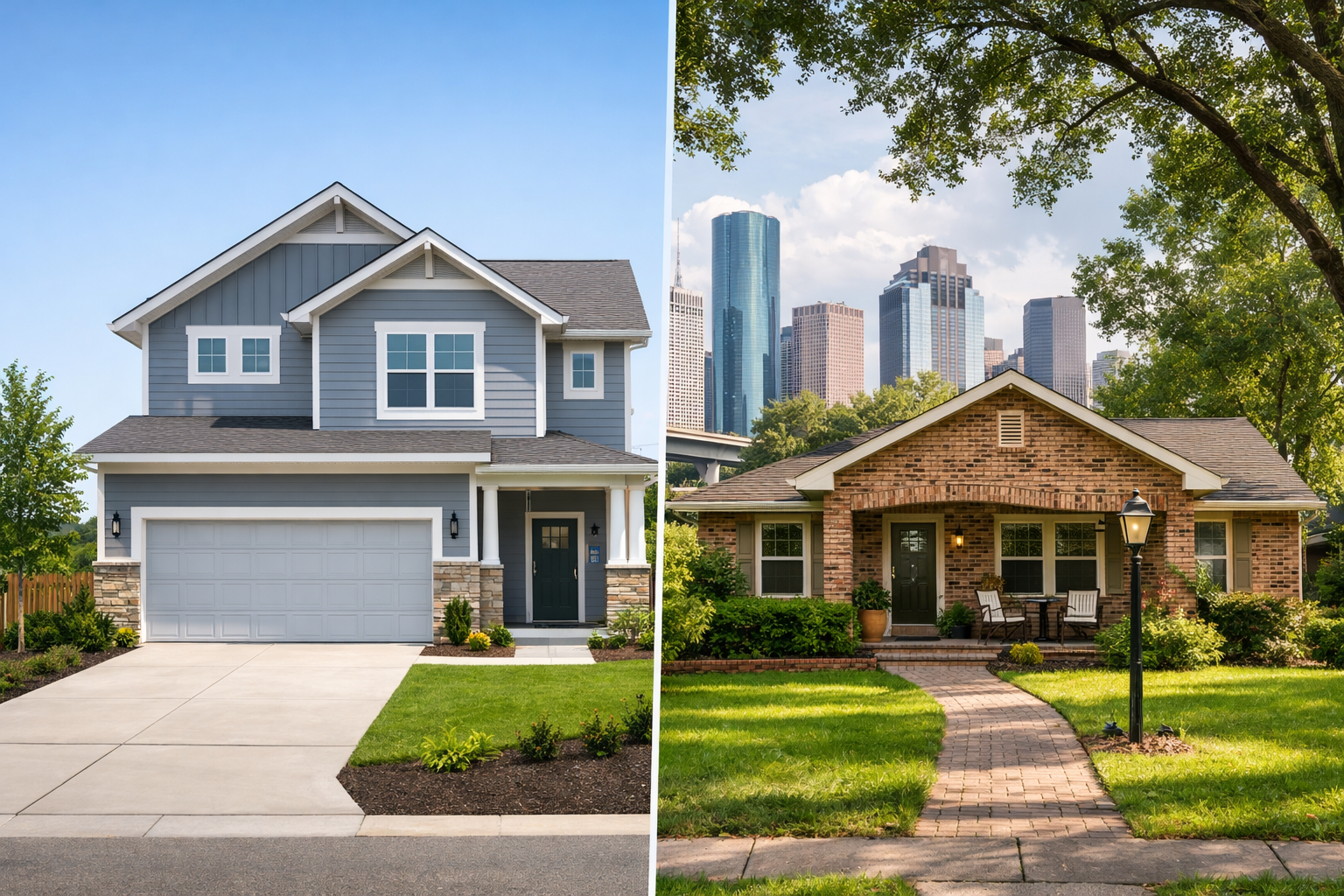
Neither new construction nor resale is universally better for first-time buyers in Houston. The better choice depends on your budget, timeline, preferred location, tolerance for maintenance and repairs, financing options, and long-term plans.
For some buyers, a newly built home offers modern layouts, builder warranties, and possible incentives that help with upfront costs. For others, a resale home offers a more established neighborhood, a shorter move-in timeline, and more room to negotiate on price or repairs. In Houston, the decision also requires close attention to property taxes, HOA or community fees, flood and drainage due diligence, insurance costs, and commute patterns.
This guide breaks down the practical differences so first-time buyers can compare options more clearly and ask better questions before making an offer.
How first-time buyers in Houston should think about new construction vs. resale
Instead of asking which option is better in general, ask which option fits your situation better. A useful comparison usually comes down to six factors:
- Budget: What can you comfortably afford not only at closing, but also monthly after taxes, insurance, and community fees?
- Timeline: Do you need to move quickly, or can you wait through a build timeline that may shift?
- Location: Are you prioritizing commute, school preferences, access to daily amenities, or a specific part of Houston?
- Maintenance tolerance: Do you want fewer immediate repair projects, or are you comfortable updating an older home over time?
- Financing: Are builder incentives available, and how do they compare with financing choices on resale homes?
- Long-term plans: How long do you expect to stay, and what matters more to you: customization, neighborhood maturity, or flexibility?
Once you compare homes through that lens, the right path often becomes clearer.
Builder incentives and preferred lenders
How incentives can help
New construction communities sometimes offer incentives such as closing cost assistance, temporary rate buydowns, design credits, or appliance and upgrade packages. These offers can make a new home look more affordable at first glance, especially for first-time buyers trying to manage cash to close.
Why buyers should compare the full financing picture
Many builders encourage buyers to use a preferred lender to access the strongest incentives. That can be worthwhile, but buyers should still compare the total cost of financing, including interest rate, fees, lender credits, lock terms, and monthly payment. The best incentive is not always the best overall loan structure.
How resale differs
With resale homes, incentives are usually negotiated with the seller rather than packaged by a builder. Depending on market conditions, a buyer may be able to negotiate seller-paid closing costs, repairs, or a price reduction. The flexibility can be helpful, but it is less standardized than a builder incentive program.
Base price vs. upgrades and lot premiums
What the advertised new construction price may not include
One of the biggest first-time buyer surprises in new construction is that the base price may not reflect the final purchase price. Structural options, finish upgrades, elevation choices, lot premiums, and post-contract selections can increase the total cost. A home that appears to fit the budget online may look different once the preferred lot and features are added.
Why resale pricing can be easier to evaluate
With resale homes, buyers usually see the actual home, actual lot, and existing finishes upfront. That can make side-by-side comparisons easier. However, a lower purchase price on a resale home may still be offset by needed repairs, updates, or higher near-term maintenance costs.
For either option, buyers should ask for a realistic estimate of total cash needed and monthly ownership costs before moving forward.
Warranties and independent inspections
New homes may include warranties, but inspections still matter
New construction often includes builder-backed warranty coverage for certain items and time periods. That can provide peace of mind, but it does not eliminate the need for independent inspections. Even brand-new homes can have workmanship issues, incomplete items, or components that deserve a closer look.
Depending on the stage of construction and the contract terms, buyers may consider inspections before drywall, at completion, and before warranty periods expire. The exact opportunities vary, so buyers should review inspection rights carefully.
Resale homes also need thorough inspections
Resale homes typically do not come with a builder warranty, so inspections are especially important. A general home inspection may reveal concerns related to roofing, HVAC, plumbing, electrical systems, foundation movement, drainage, windows, or deferred maintenance. Additional specialty inspections may be appropriate depending on the property.
Whether buying new or resale, an independent inspector works for the buyer, not the seller or builder.
Property taxes in Houston, including completed-home tax estimates
Property taxes can materially affect affordability in Houston-area homeownership, and first-time buyers should not rely only on rough online estimates.
Why new construction tax estimates can be tricky
For new construction, early tax figures may reflect land value, partial improvements, or prior-year assessments that do not represent the completed home. That can make the initial estimate look lower than the eventual tax bill after the home is fully assessed. Buyers should ask for a completed-home tax estimate based on the expected finished value and applicable taxing authorities.
Why resale taxes still need verification
For resale homes, the seller's current tax bill may not match the buyer's future bill. Assessed values, exemptions, and ownership changes can affect what a new owner ultimately pays.
Before committing, buyers should verify property-specific tax information with the local tax authority, lender, title company, and other qualified professionals involved in the transaction.
HOA, MUD, and PID fees where applicable
Houston-area communities may include costs beyond principal, interest, taxes, and insurance.
HOA fees
Some new and resale neighborhoods have homeowners association fees that support amenities, maintenance, or community standards. The amount, billing schedule, and restrictions vary by community.
MUD and PID considerations
In some areas, buyers may also encounter Municipal Utility District charges or Public Improvement District assessments. These can affect monthly affordability and should be reviewed carefully as part of the total ownership picture.
Buyers should request current fee information, understand what each charge covers, and confirm whether any special assessments or community-specific obligations apply.
Homeowners insurance and flood insurance
Insurance costs in Houston can vary significantly based on the home's age, construction type, location, claims history, and flood exposure.
New construction insurance considerations
A newer home may have features that influence insurability or premium pricing, but buyers should still obtain property-specific quotes rather than assuming lower costs.
Resale insurance considerations
Older resale homes may raise additional underwriting questions depending on roof age, prior claims, plumbing materials, electrical systems, or other condition factors.
Flood insurance and flood risk due diligence
Flood risk should be evaluated carefully for both new and resale homes. A property's flood zone, drainage patterns, prior flooding disclosures, elevation characteristics, and lender requirements can all matter. Even when flood insurance is not required by a lender, buyers may still want to understand their options and exposure.
Insurance decisions should be based on quotes and guidance from licensed insurance professionals familiar with the specific property.
Drainage and flood due diligence
Houston buyers should treat drainage and flood due diligence as a core part of the decision, not an afterthought.
Questions to ask on new construction
- How does the lot drain during heavy rain?
- Is the home in or near a mapped floodplain or flood-prone area?
- What site grading, detention, or drainage infrastructure serves the community?
- Are there disclosures, engineering materials, or community documents available for review?
Questions to ask on resale
- What do seller disclosures say about prior flooding, water intrusion, or drainage issues?
- Are there visible grading concerns, standing water patterns, or signs of prior repairs?
- What do flood maps, insurance quotes, and local records suggest about risk?
Independent inspections and property-specific research can help buyers make a more informed decision.
Maintenance and repair expectations
What buyers may expect with new construction
New homes may reduce the likelihood of immediate repair projects compared with some older homes, especially when major systems are newly installed. Even so, no home is maintenance-free. Buyers should budget for routine upkeep, warranty follow-up items, landscaping, window coverings, appliances if not included, and other move-in costs.
What buyers may expect with resale
Resale homes may offer more character, mature landscaping, and established surroundings, but they can also come with aging systems or deferred maintenance. Some buyers are comfortable taking on updates over time if it helps them secure a better location or lower entry price.
The key question is not whether one option has costs and the other does not. It is which type of cost and responsibility fits the buyer better.
Location, commute, and neighborhood tradeoffs
For many first-time buyers in Houston, location is the deciding factor.
Why resale often wins on centrality
Resale homes are often available in more established areas closer to employment centers, restaurants, parks, and daily conveniences. That can mean shorter commutes and a more mature neighborhood feel.
Why new construction may offer different value
New construction may be more available in developing areas where buyers can get newer finishes, larger floor plans, or community amenities for the price. The tradeoff may be a longer commute, less mature landscaping, or a neighborhood still under construction.
Buyers should compare not just the house, but also the lifestyle impact of the location.
Lot size and neighborhood maturity
What new construction buyers may see
Some new communities offer modern planning, sidewalks, and amenities, but lot sizes, tree cover, and neighborhood maturity can vary widely. Buyers should confirm what is included on the specific lot and what nearby construction may still be underway.
What resale buyers may see
Resale neighborhoods may offer larger lots, established trees, and a more settled feel. However, older neighborhoods can also come with older infrastructure, varied remodeling quality, or homes with differing maintenance histories.
Construction delays vs. resale timing
New construction timing can shift
If the home is not complete, move-in timing may depend on construction progress, weather, labor availability, materials, inspections, and utility readiness. Buyers with a hard deadline should ask how timing is handled and what happens if completion is delayed.
Resale timing is often more predictable
Resale transactions can still face delays, but the home usually already exists in finished form. That can make planning easier for buyers who need to coordinate a lease ending, job relocation, or school schedule.
Resale negotiation and condition
One advantage of resale is the ability to negotiate based on the actual condition of the home and current market dynamics.
- A buyer may be able to negotiate price, repairs, closing costs, or contract terms.
- The inspection period can reveal issues that affect the negotiation strategy.
- The home's condition is visible now rather than based on plans, samples, or a model home.
That said, resale homes can also attract competition, and some sellers may prefer limited repairs or stronger contract terms. Outcomes vary by property and market conditions.
Appraisal and financing considerations
New construction
With new construction, upgrades and premiums can affect value and financing structure. Buyers should understand how contract price, incentives, and lender requirements interact. It is also important to confirm estimated monthly payments using realistic tax and insurance assumptions.
Resale
With resale homes, appraisal outcomes may be influenced by comparable sales, condition, and negotiated price. If repairs are needed, financing options may differ depending on the loan program and property condition.
Loan suitability, qualification, and closing costs should be reviewed directly with a qualified lender.
Move-in timing and lifestyle fit
Sometimes the best choice is simply the one that fits real life better.
- If you need a home soon, resale may offer a faster path.
- If you want a brand-new layout and can tolerate a longer timeline, new construction may be worth exploring.
- If you want an established area and visible neighborhood character, resale may feel more comfortable.
- If you prefer selecting finishes and starting with newer systems, new construction may be more appealing.
Side-by-side decision checklist for first-time buyers in Houston
New construction may be the better fit if you:
- Want a brand-new home with modern finishes and layouts
- Value builder warranty coverage and newer major systems
- Can compare builder incentives against outside financing options carefully
- Understand that base price may increase with upgrades, lot premiums, and selections
- Are comfortable verifying completed-home tax estimates rather than relying on early figures
- Can tolerate possible construction delays or shifting completion dates
- Are willing to perform independent inspections even on a new home
- Are comfortable with the location, commute, and neighborhood development stage
Resale may be the better fit if you:
- Need a more predictable move-in timeline
- Prefer an established neighborhood, mature trees, or a more central location
- Want to evaluate the exact home, lot, and condition before making a decision
- Are comfortable budgeting for repairs, updates, or ongoing maintenance
- Want the possibility of negotiating price, repairs, or seller concessions
- Prefer to compare homes where upgrades and lot characteristics are already visible
- Are prepared to review disclosures, inspections, insurance, and tax impacts carefully
Frequently asked questions
Is new construction cheaper than resale in Houston?
Not necessarily. New construction may include incentives, but total cost can rise with upgrades, lot premiums, taxes, insurance, and community fees. Resale may have a lower or higher total cost depending on condition, location, and needed repairs.
Do I need an inspection on a brand-new home?
Yes, many buyers choose independent inspections on new construction because new homes can still have defects, incomplete work, or items that need correction.
Are property taxes lower on new construction?
Not automatically. Early estimates may not reflect the completed home's assessed value. Buyers should request a completed-home tax estimate and verify property-specific information.
Is resale safer from a financing standpoint?
Not universally. Both new construction and resale can present financing considerations. The better fit depends on the property, loan program, appraisal, condition, and total monthly cost.
Which option is better for buyers worried about maintenance?
New construction may reduce immediate repair needs in some cases, but every home requires upkeep. Buyers should compare likely maintenance timing, warranty coverage, and overall ownership costs.
Should first-time buyers choose based on incentives alone?
No. Incentives can help, but they should be weighed alongside purchase price, loan terms, taxes, insurance, fees, location, inspection findings, and long-term plans.
Final takeaway
For first-time buyers in Houston, the better choice is not new construction or resale in the abstract. It is the home that best matches your budget, timeline, location priorities, maintenance comfort level, financing structure, and long-term goals.
Before signing a contract, verify property-specific costs, disclosures, insurance options, tax estimates, community fees, inspection findings, and contract terms with the builder, lender, inspector, insurer, HOA, title company, local tax authority, and other qualified professionals involved in the transaction.
Go to our YouTube Channel Here
Call or Contact us:
832-905-9501
mflores@vantagerec.com
Vantage Real Estate Group Powered by PLACE

Michael Flores
Owner/Lead Agent | Vantage Real Estate Group | Keller Williams Signature Realty
or another way