
Categories
Home Buying Strategies, Home Tips, houston real estate, Purchasing Real EstatePublished August 10, 2026
Should You Buy a Home With a Pool in Houston?

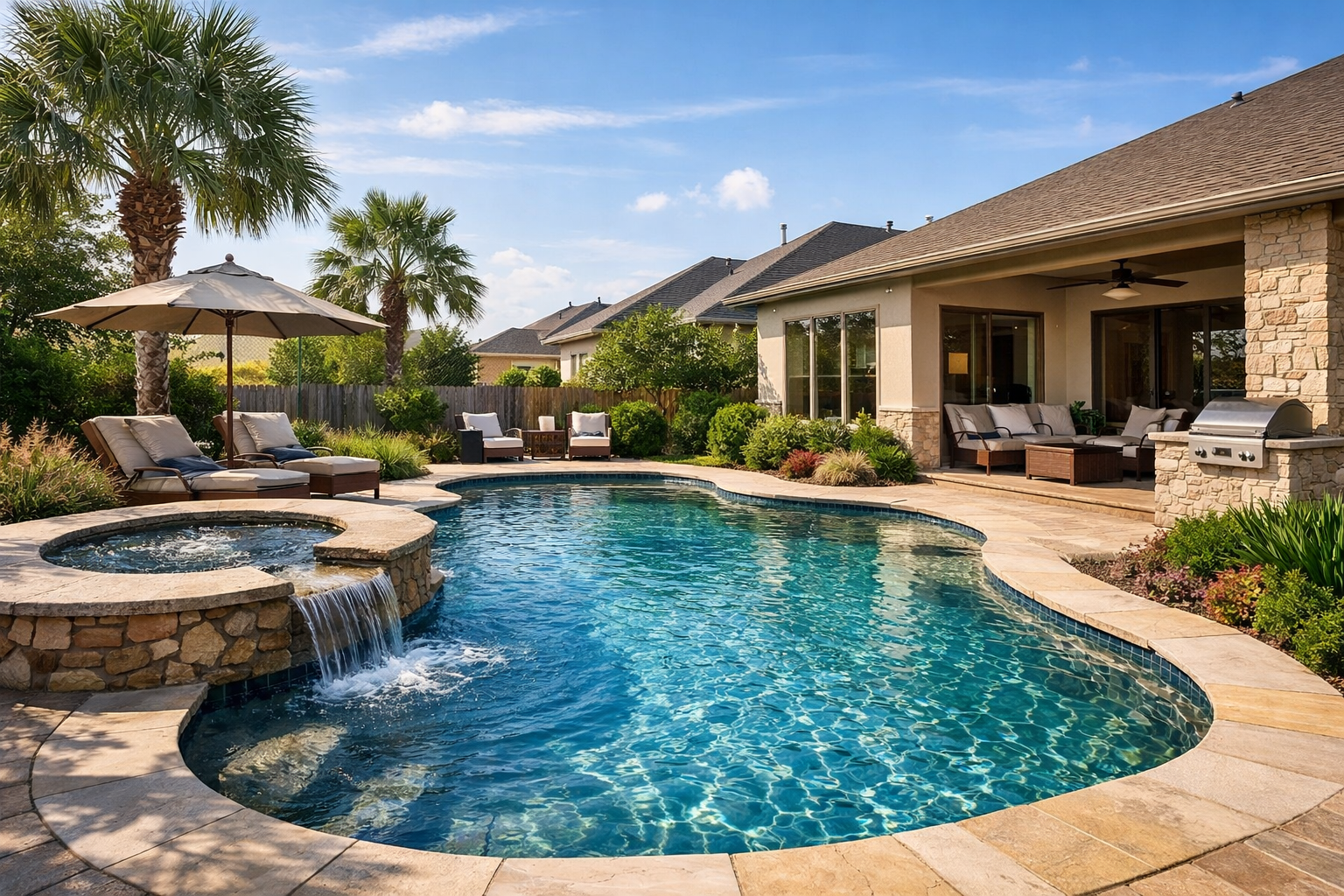
Buying a home with a pool in Houston can be a great lifestyle choice, especially for buyers who want a private place to cool off during long, hot summers. But a pool also adds maintenance, insurance, safety, repair, and resale considerations. The right decision depends on the pool’s condition, your budget, how often you expect to use it, and whether you are prepared for the ongoing responsibility of ownership.
Should you buy a home with a pool in Houston?
You should consider buying a home with a pool in Houston if you will use it regularly, the pool passes a thorough inspection, and you have budgeted for maintenance, repairs, utilities, and safety upgrades. A pool can add enjoyment and appeal in Houston’s climate, but it should not be treated as a maintenance-free bonus. Before making an offer, evaluate the pool separately from the house.
Why Houston buyers consider homes with pools
Houston’s warm climate makes a backyard pool attractive for many households. A pool can create a convenient space for recreation, entertaining, exercise, and family time without leaving home. In some neighborhoods, buyers may also see pools as a desirable feature that helps a property stand out.
Still, a pool is not automatically a benefit for every buyer. Some buyers prefer more lawn space, lower utility bills, fewer maintenance tasks, or a backyard that is easier to modify. The goal is to decide whether the pool fits your lifestyle, not simply whether it looks appealing during a showing.
What does it cost to own a pool in Houston?
The cost of owning a pool varies based on its size, age, equipment, finish, landscaping, usage, and whether you handle routine care yourself or hire a service. Buyers should plan for recurring expenses as well as occasional larger repairs.
- Routine maintenance: Cleaning, water testing, chemicals, filter care, and seasonal service.
- Utilities: Pool pumps, heaters, lighting, and water use can affect monthly bills.
- Equipment repairs: Pumps, filters, heaters, automation systems, lights, and plumbing can eventually need repair or replacement.
- Surface and structural work: Plaster, tile, coping, decking, and drainage may require attention as the pool ages.
- Safety improvements: Fencing, self-closing gates, alarms, covers, and other safety features may be needed or desired.
- Insurance: Ask your insurance provider how a pool affects coverage, liability limits, and any safety requirements.
Request recent utility bills, pool-service invoices, repair records, warranties, and equipment information when available. These documents can help you estimate the real cost of ownership instead of relying on a general rule of thumb.
What should you inspect before buying a Houston home with a pool?
A standard home inspection may identify visible concerns, but buyers should strongly consider a separate pool inspection by a qualified pool professional. The pool inspection should be scheduled during the option period so you have time to review findings and make informed decisions.
Pool structure and surface
Ask the inspector to evaluate visible cracks, plaster condition, tile, coping, decking, drainage, and signs of movement or leaks. Not every crack means a major problem, but documentation and professional guidance matter.
Equipment and plumbing
Have the pump, filter, heater, cleaner, valves, automation controls, lights, and visible plumbing checked. Ask about the age, condition, expected remaining life, and availability of replacement parts.
Leaks and water loss
Water loss can come from evaporation, splash-out, plumbing issues, or structural leaks. A pool professional can help determine whether the pool is losing water beyond what would be expected.
Safety features
Review fencing, gates, latches, alarms, covers, and access points. If children, guests, pets, or tenants will use the property, safety should be a central part of your decision and budget.
Drainage and backyard condition
Houston buyers should pay close attention to drainage around the pool and home. Standing water, poor grading, damaged decking, or drainage that directs water toward the house can create costly issues over time.
Does a pool increase home value in Houston?
A pool may improve a home’s appeal to certain Houston buyers, but it does not guarantee that the seller will recover the full cost of installing it. Value depends on the neighborhood, price range, pool condition, lot size, outdoor living space, and buyer demand at the time of sale.
In communities where pools are common, buyers may expect one or view it as a competitive feature. In other areas, a pool may narrow the buyer pool because some shoppers see it as an expense or safety concern. When evaluating a specific property, compare it with recent nearby sales that have similar pool features, condition, and lot characteristics.
Is a pool a good idea for families with children?
A pool can be a source of family enjoyment, but it also requires consistent supervision and safety planning. Buyers with children should evaluate the backyard layout, barriers, gate hardware, visibility from the home, and the cost of any safety upgrades. A pool should never replace active supervision.
Questions to ask the seller before buying a home with a pool
- When was the pool built, and who built it?
- What repairs, resurfacing, replastering, or equipment replacements have been completed?
- Are there transferable warranties, service records, permits, or manuals?
- How old are the pump, filter, heater, cleaner, and automation system?
- Has the pool had a leak, structural repair, drainage issue, or insurance claim?
- What does routine maintenance typically cost?
- Are there HOA rules related to pool equipment, fencing, noise, or backyard changes?
- What safety features are currently installed?
When a Houston pool may not be worth it
A pool may not be the right fit if you do not expect to use it often, prefer a low-maintenance yard, have limited room in your monthly budget for upkeep, or are uncomfortable with the safety responsibilities. It may also be wise to reconsider if the inspection reveals significant structural, equipment, drainage, or leak concerns that cannot be resolved on acceptable terms.
How to make a smart offer on a Houston home with a pool
Do not assume the pool is in perfect condition because it looks clean or staged well. Include an option period, order a pool inspection, review repair estimates, and consider the pool’s condition when evaluating the overall value of the property. If issues are found, your options may include requesting repairs, negotiating a credit or price adjustment, accepting the condition with a clear budget for repairs, or moving on to another home.
Frequently asked questions about buying a home with a pool in Houston
Are pools worth it in Houston?
Pools can be worth it in Houston for buyers who will use them regularly and can comfortably manage the maintenance, repair, utility, insurance, and safety costs. The pool’s condition and the buyer’s lifestyle matter more than the feature alone.
Do I need a pool inspection when buying a house in Houston?
A separate pool inspection is strongly recommended. A qualified pool professional can evaluate equipment, visible structural concerns, plumbing, leaks, safety features, and maintenance needs that may not be fully covered in a general home inspection.
Does a pool raise homeowners insurance in Texas?
A pool can affect insurance coverage and liability considerations. Contact your insurance provider before closing to confirm coverage, required safety measures, available liability limits, and the estimated premium for the specific property.
How much maintenance does a pool require in Houston?
Most pools require regular cleaning, water testing, chemical balancing, equipment monitoring, and periodic professional service. The exact workload and cost depend on the pool’s size, equipment, landscaping, usage, and condition.
Can a pool hurt resale value?
A pool can appeal strongly to some buyers and discourage others. Its effect on resale depends on the neighborhood, price range, condition, safety, lot size, and local buyer demand. A well-maintained pool is generally easier to market than one with visible deferred maintenance or unresolved repair issues.
Bottom line
A Houston home with a pool can be an excellent purchase when it supports the way you want to live and the pool is in sound condition. Treat it as a major property feature with its own inspection, budget, and safety plan. By reviewing records, checking insurance, understanding ongoing costs, and comparing similar local homes, you can decide whether the pool is a true advantage for your household.
Watch our Youtube Video
Get a free home valuation here
Visit our website here
Go to our YouTube Channel Here
Call or Contact us:
832-905-9501
mflores@vantagerec.com
Vantage Real Estate Group Powered by PLACE

Michael Flores
Owner/Lead Agent | Vantage Real Estate Group | Keller Williams Signature Realty
or another way