
Categories
Home Buying Process, Home Buying Strategies, New BuyersPublished November 4, 2026
Starter Home vs. Forever Home: What Should First-Time Buyers Choose?

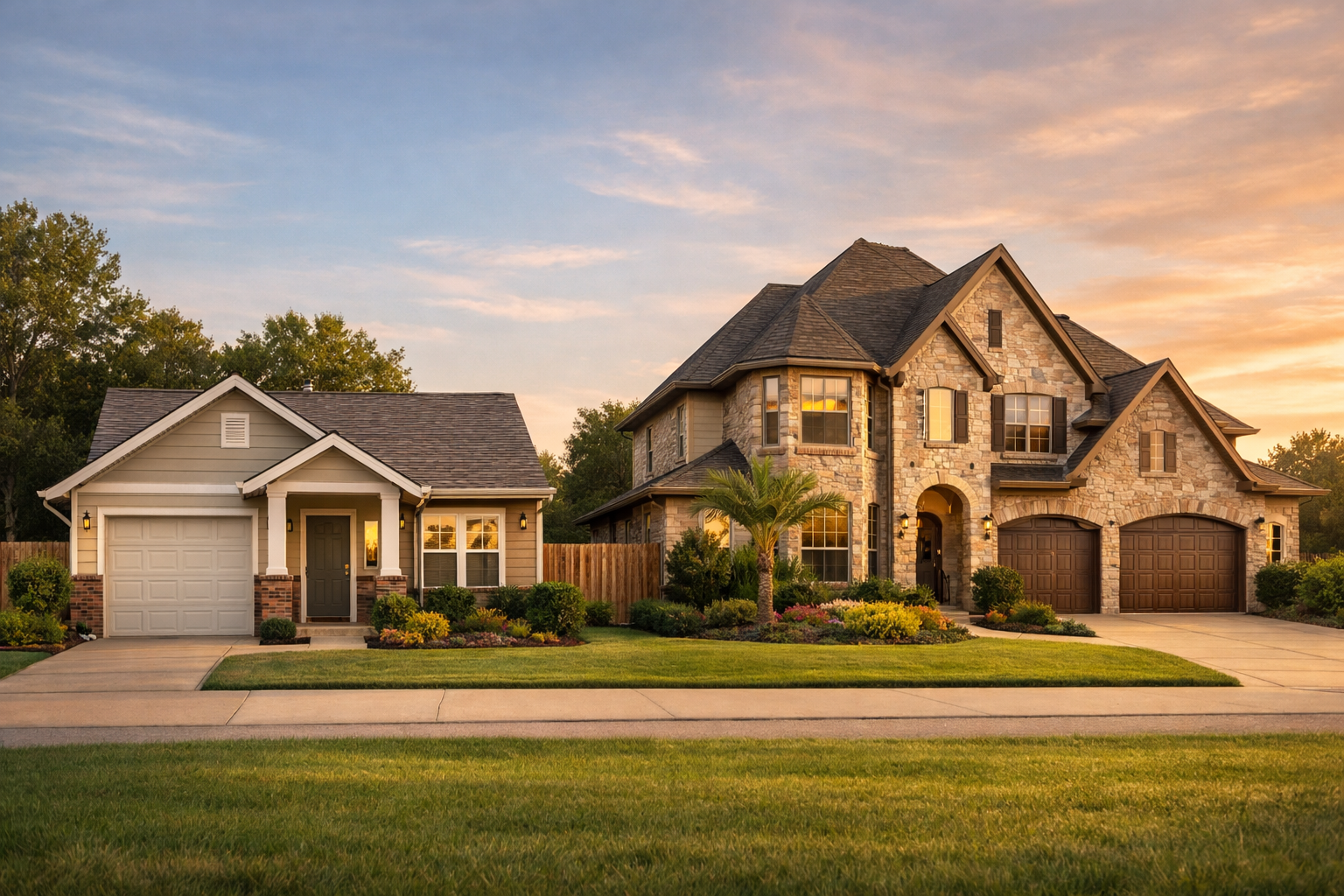
Buying your first home in Texas often comes down to one big question: should you buy a starter home now, or wait until you can afford a forever home? For many buyers in Houston and surrounding areas, the answer depends less on the label and more on how well the home fits your budget, timeline, lifestyle, and flexibility needs.
Direct answer: Most first-time buyers should choose the home that fits their finances and life over the next several years without stretching too far. A starter home can be the better choice if it keeps your monthly payment manageable and gives you flexibility. A forever home can make sense if you expect to stay longer, can comfortably afford it, and do not need to compromise your cash reserves or overall stability.
What people mean by a starter home vs. a forever home
A starter home is usually a more affordable property that helps you become a homeowner without trying to solve every long-term need on day one. It may be smaller, older, farther from ideal amenities, or less customized than what you ultimately want.
A forever home is the property you expect to keep for a much longer period. Buyers often picture more space, a preferred neighborhood, a layout that can support future household changes, and features they do not expect to outgrow quickly.
In real life, these categories are not fixed. A condo, townhome, or smaller single-family home in Houston, Katy, Cypress, Sugar Land, or Pearland might function as a starter home for one buyer and a long-term home for another.
Start with budget and monthly payment fit
The first question is not whether a home is a starter home or a forever home. It is whether the payment fits your life comfortably.
That means looking beyond the purchase price and considering principal, interest, taxes, insurance, HOA dues if applicable, utilities, maintenance, and move-in costs. A home that looks perfect on paper can become stressful if it leaves no room for savings, repairs, travel, childcare, or unexpected expenses.
If buying a forever home means stretching your budget to the point where every future expense feels tight, that home may not actually be the better long-term choice. A starter home can create a more stable path if it allows you to build equity while keeping your finances healthier.
Think about how long you expect to own the home
Your expected ownership timeline matters. If you think you may relocate, change jobs, grow your household, or shift neighborhoods within a few years, flexibility may matter more than trying to buy your ideal long-term property right away.
If you expect to stay put for a longer period and your finances support it, a forever-home purchase may reduce the need for another move later. That can matter if you want to avoid repeat moving costs, future home searches, and the disruption of selling and buying again.
The key is to be realistic. Do not choose a forever home based only on a best-case scenario. Do not dismiss a starter home just because it is not your final dream property.
Match the home to your commute and lifestyle needs
For first-time buyers in the Houston area, commute patterns and daily routines can shape the right decision as much as square footage. A larger home farther out may offer more space, but it can also mean more driving time, different school or activity access, and a different day-to-day rhythm.
Ask yourself what matters most right now. Is it shorter commute time, walkability, lower maintenance, extra bedrooms, a home office, yard space, or proximity to family support? A starter home may win if it supports your current lifestyle better. A forever home may win if it solves needs you are confident will matter for years.
Be honest about maintenance and renovation capacity
Some buyers choose a starter home expecting to renovate over time. Others choose a forever home assuming they will handle larger upkeep because the property checks more boxes. Both approaches can work, but only if they match your time, budget, and tolerance for projects.
If you are buying your first home, it helps to be realistic about what you can actually manage. Cosmetic updates are one thing. Ongoing repairs, aging systems, landscaping demands, and larger renovation plans are another.
A home that needs work is not automatically a bad choice. But if the property requires more money or energy than you can comfortably give, it may create pressure instead of opportunity.
Consider resale flexibility, even if this is not your forever plan
Even if you are focused on buying a home to live in, it still helps to think about future flexibility. That does not mean trying to predict the market. It means asking practical questions about how broadly appealing the property may be later.
Layout, location, parking, school-zone preferences, lot usability, stairs, HOA restrictions, and property type can all affect future resale flexibility. A starter home with a functional layout in a convenient location may be easier to transition out of than a larger home with highly specific features that narrow the buyer pool.
That does not mean you should buy only for resale. It means you should avoid ignoring future flexibility altogether.
Weigh neighborhood and property-type tradeoffs
Many first-time buyers compare a smaller single-family home in a preferred area against a larger home farther away, or a townhome or condo against a detached home with more maintenance. There is no universal right answer.
A starter home may give you access to a neighborhood you prefer now, even if the home itself is smaller. A forever home may offer more space and long-term functionality, but it may come with a longer commute, higher carrying costs, or more upkeep.
Think about what tradeoffs you are willing to make and which ones will bother you every week. The right choice is often the one whose compromises you can live with most comfortably.
Plan for future household changes without overbuying
It is smart to think ahead, but it is also easy to overbuy based on possibilities that may or may not happen on your timeline. Buyers sometimes stretch for extra bedrooms, oversized lots, or more house than they currently need because they are trying to solve every future scenario at once.
Planning ahead is useful. Overcommitting to a hypothetical future is risky. If your household may grow, your work setup may change, or you may need multigenerational flexibility later, factor that in. Just make sure those possibilities do not push you into a payment or property burden that feels uncomfortable now.
Look at financing and cash reserves, not just approval amount
Being approved for a certain loan amount does not automatically mean you should spend that much. First-time buyers should compare not only what they can qualify for, but also what leaves enough room for reserves after closing.
Cash reserves matter. You may need funds for repairs, furnishings, moving expenses, utility deposits, maintenance, and unexpected costs. If buying a forever home drains your savings, the emotional comfort of getting more house may be offset by financial stress later.
Sometimes the better decision is the one that leaves you with more breathing room.
Do not let emotion make the decision alone
It is normal to feel pressure around your first purchase. Some buyers worry that a starter home means settling. Others worry that waiting for a forever home means missing their chance. Both fears can lead to poor decisions.
A home should support your life, not just your image of what your first purchase is supposed to look like. If you love a property, that is great. But the numbers, condition, location, and long-term fit still need to work.
The goal is not to buy the most impressive home you can qualify for. The goal is to buy the right home for this stage of your life.
How to avoid overbuying or waiting indefinitely
If you are stuck between a starter home and a forever home, ask two practical questions:
- Would buying this home stretch me too far financially or operationally?
- Am I delaying a good decision because I am chasing a perfect one?
If the forever home option creates too much strain, it may be overbuying. If the starter home meets your real needs and keeps you stable, it may be the smarter move. If you keep rejecting workable homes because they do not solve every future possibility, you may be waiting indefinitely for a version of certainty that homeownership rarely provides.
Starter home vs. forever home decision checklist
Use this scorecard when comparing options:
- Monthly payment: Can I afford this comfortably, not just technically?
- Cash reserves: Will I still have savings after closing and move-in?
- Ownership timeline: Does this fit how long I realistically expect to stay?
- Commute and lifestyle: Does this support my daily routine?
- Maintenance level: Can I handle the upkeep and repairs?
- Space needs: Does this fit my current needs without forcing major compromises?
- Future flexibility: Would this still work if life changes somewhat?
- Neighborhood fit: Am I comfortable with the location and tradeoffs?
- Property type: Does a condo, townhome, or single-family home make the most sense for me?
- Emotional pressure: Am I choosing based on fit, or fear of missing out?
If one option consistently scores better across these categories, that is usually more useful than the starter-versus-forever label.
Common mistakes first-time buyers make
- Buying based on maximum approval instead of comfortable affordability
- Assuming a forever home is always the smarter financial move
- Ignoring commute, maintenance, or lifestyle tradeoffs
- Underestimating move-in and repair costs
- Trying to predict every future life change perfectly
- Waiting too long for an ideal home that may not match current needs
- Choosing emotionally before reviewing the full monthly cost and condition
FAQ: Starter home vs. forever home for first-time buyers
Should I buy a starter home or wait for my forever home?
Choose the home that fits your finances, timeline, and lifestyle best over the next several years. A starter home can be the better choice if it keeps you flexible and financially stable.
Is buying a starter home a mistake?
No. A starter home can be a practical first step into homeownership if it meets your needs and does not create unnecessary financial strain.
How do I know if I am overbuying?
You may be overbuying if the payment feels tight, your savings would be depleted after closing, or the home solves future possibilities at the expense of present stability.
Does a forever home always save money in the long run?
Not necessarily. Long-term value depends on many factors, including condition, ownership costs, location, and how long you actually stay.
Should first-time buyers prioritize location or house size?
That depends on your routine and priorities. For some buyers, location and convenience matter more than extra space. For others, layout and room to grow matter more.
Can a condo or townhome be a forever home?
Yes. A forever home is not defined by property type alone. It is defined by how well the home supports your long-term goals, budget, and lifestyle.
Note: Buyers should evaluate their own finances, goals, contract obligations, and property-specific factors with qualified real estate, lending, inspection, and financial professionals before making a purchase decision.
Get a free home valuation here
Visit our website here
Go to our YouTube Channel Here
Call or Contact us:
832-905-9501
mflores@vantagerec.com
Vantage Real Estate Group Powered by PLACE

Michael Flores
Owner/Lead Agent | Vantage Real Estate Group | Keller Williams Signature Realty
or another way