
Categories
Luxury, houston real estatePublished October 23, 2026
What Actually Makes a Houston Home Luxury?

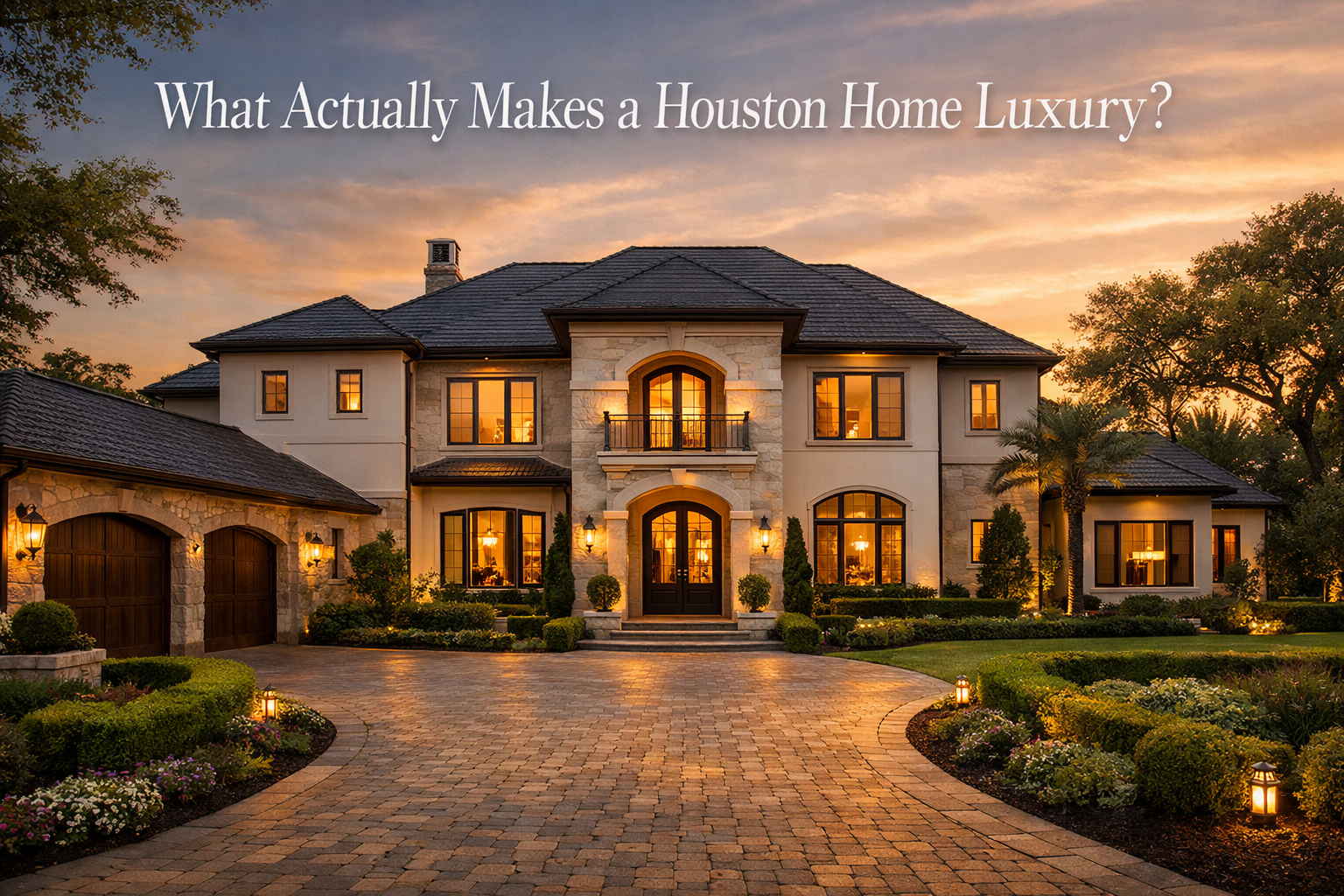
Luxury is more than a price tag, a designer label, or a dramatic chandelier.
In Houston, a home feels truly luxury when it combines location, land, design, construction quality, privacy, functionality, and long-term livability in a way that stands out beyond simple square footage or flashy finishes. The homes that hold attention over time usually offer durable value drivers, while highly personal features may impress one buyer and do very little for another.
When buyers and sellers talk about luxury, it is easy to focus on the obvious details first. A striking entry, imported stone, a temperature-controlled wine room, or a resort-style pool can all add appeal. But the features that often matter most are the ones that shape daily life and long-term value: where the home sits, how it was built, how it flows, how private it feels, how well the systems perform, and how much effort it takes to maintain.
Price point does not automatically equal true luxury
A high list price alone does not make a home luxury. In every market, including Houston and surrounding areas such as Memorial, River Oaks, West University, Bellaire, The Woodlands, and Sugar Land, price can reflect many things. It may reflect lot size, neighborhood reputation, recent renovations, architectural pedigree, or simply seller expectations.
True luxury usually shows up in a more complete package. Buyers tend to notice when a home offers a strong location, thoughtful design, quality materials, privacy, convenience, and a sense of permanence. A home can be expensive without feeling refined, and a home can feel deeply luxurious because every detail works together, even if the most dramatic features are understated.
That distinction matters for both buyers and sellers. Buyers want to know what they are really paying for. Sellers want to understand which features support value and which upgrades may be too personal to resonate broadly.
Location and lot characteristics often drive luxury value first
One of the clearest markers of luxury is where the home sits and how the lot functions. In Houston, location can influence privacy, convenience, prestige, access to daily amenities, and long-term desirability. Buyers often look beyond the house itself to evaluate the full setting.
Important lot and location considerations can include:
- Street presence, including whether the home sits on a quiet street, corner lot, cul-de-sac, or heavily traveled road
- Lot size and shape, especially if outdoor living, guest parking, or future flexibility matters
- Setbacks and spacing from neighboring homes
- Mature trees and landscaping that create privacy and visual impact
- Views or orientation, where applicable
- Ease of access to major corridors, private schools, business centers, clubs, dining, or airports, depending on the buyer’s lifestyle
Luxury buyers often pay close attention to how a property feels on approach and how it lives once they are inside the gate, driveway, or motor court. A beautiful home on a compromised lot may not deliver the same experience as a well-positioned home with stronger privacy and flow.
Architecture and construction quality matter more than trend-driven finishes
Luxury buyers usually notice quality quickly, even when they cannot name every technical detail on the spot. Architecture should feel intentional. Materials should feel substantial. Craftsmanship should look consistent from room to room.
Some of the strongest long-term value drivers include:
- Architectural coherence, where the exterior, interior, and floor plan feel aligned
- Solid construction and workmanship, including trim detail, millwork, cabinetry fit, flooring installation, and finish consistency
- Quality windows and doors, especially when they improve light, sound control, and energy performance
- Durable materials that age well instead of looking dated quickly
- Thoughtful renovation work that feels integrated rather than pieced together over time
By contrast, some homes rely heavily on visual drama without the same level of underlying quality. Oversized chandeliers, bold wallpaper, or highly stylized finishes may photograph well, but they do not replace strong construction, proportion, and craftsmanship.
Functional layout and scale separate impressive homes from truly livable ones
A luxury home should not only look impressive, it should function well. Buyers often discover during showings that a home with beautiful photos may still have awkward circulation, underused square footage, or rooms that feel disconnected from daily life.
Functional luxury often includes:
- Well-proportioned rooms that feel substantial without wasting space
- A practical relationship between kitchen, living, dining, and outdoor areas
- Main-level and upper-level flow that supports both entertaining and everyday routines
- Storage that matches the scale of the home
- Guest accommodations that feel private and comfortable
- Flexible spaces for work, fitness, media, hobbies, or multigenerational living
Scale matters, but bigger is not always better. A home can have significant square footage and still feel inefficient. Luxury buyers often respond more strongly to homes where the layout feels intuitive, balanced, and easy to live in.
Privacy, security, and access are core luxury features
Privacy is one of the most valuable luxury features because it affects daily comfort in a way that photos rarely capture. The same is true for security and access. These elements may not be flashy, but they often shape how exclusive and comfortable a property feels.
Buyers may evaluate:
- Distance from neighboring homes
- Landscaping that screens views
- Gated entry or controlled access, where applicable
- Driveway design and guest arrival experience
- Garage placement and capacity
- Lighting, cameras, alarm systems, and smart entry controls
For some buyers, privacy means a large lot with mature landscaping. For others, it means a lock-and-leave property with controlled access and low exterior exposure. The right setup depends on lifestyle, but privacy and ease of access are almost always part of the luxury conversation.
Kitchens, baths, and materials should feel elevated and durable
Luxury kitchens and baths matter, but not just because they look expensive. Buyers often respond best when these spaces combine beauty with performance and longevity.
Features that tend to support lasting appeal include:
- High-quality cabinetry and hardware
- Natural stone or other durable surfaces
- Professional-grade appliances that fit the scale and use of the home
- Well-planned lighting, including task and ambient layers
- Spa-like primary baths with strong layout, storage, and finish quality
- Consistent material selections that feel timeless rather than overly themed
Highly customized finishes can still be beautiful, but they may not appeal to every buyer. A dramatic color palette, unusual stone choice, or niche fixture style can become a personal preference issue rather than a broad value driver.
Outdoor living and landscaping should extend the home, not just decorate it
In Houston, outdoor living often plays a major role in how a luxury property is experienced. Buyers may look for spaces that feel usable, private, and integrated with the home rather than simply expensive to install.
Strong outdoor features can include:
- Covered entertaining areas
- Outdoor kitchens or service areas
- Pool and spa design that fits the lot well
- Landscape lighting and irrigation
- Guest-friendly circulation between indoor and outdoor spaces
- Hardscape and drainage planning that support long-term performance
Amenities that look impressive in photos but are difficult to maintain or rarely used may not carry the same weight as a well-designed outdoor space that feels comfortable year-round.
Smart-home infrastructure and resilience matter more than novelty
Luxury buyers increasingly care about infrastructure. Smart-home features can add convenience, but the real value often comes from systems that improve comfort, control, and reliability.
Examples include:
- Integrated lighting, audio, climate, and security systems
- Reliable networking and Wi-Fi coverage throughout the home
- Generator readiness or backup power solutions, where applicable
- Efficient HVAC performance and zoning
- Water filtration or leak-detection systems
- Garage and gate automation
Technology should feel seamless. If a home has complicated systems that are difficult to operate, unsupported, or expensive to update, those features may feel more like a burden than a benefit.
Maintenance and operating demands should match the buyer’s lifestyle
Luxury ownership comes with ongoing responsibilities. A home may be stunning, but buyers should still understand what it takes to operate and maintain it well. Sellers should also recognize that visible maintenance discipline can strengthen buyer confidence.
Important considerations include:
- Age and condition of major systems
- Roofing, windows, exterior materials, and drainage upkeep
- Pool, spa, elevator, generator, or specialty system servicing
- Landscape maintenance demands
- Insurance and utility considerations
- Whether the home is easy to lock and leave
Some buyers want a fully staffed estate-style property. Others want luxury finishes with lower maintenance demands. Neither is inherently better, but the home should align with the buyer’s expectations and capacity.
Some features are highly personal and may date quickly
Not every expensive feature adds durable value. Some amenities are highly personal, highly trend-driven, or costly to reverse. These can still help a home stand out, but they should be viewed differently from core value drivers.
Examples may include:
- Very specific themed rooms
- Overly customized built-ins
- Bold decorative finishes
- Niche wellness or entertainment spaces that do not suit most buyers
- Specialty car displays or collector-focused features that appeal to a narrow audience
These amenities can be exciting, but they are often more subjective than location, lot quality, architecture, privacy, or construction standards. Buyers should separate personal excitement from long-term usefulness. Sellers should be realistic about which upgrades are broadly appealing and which are more lifestyle-specific.
Buyer evaluation checklist for a Houston luxury home
- Does the location support the lifestyle you want day to day?
- How does the lot feel in terms of privacy, access, and outdoor usability?
- Does the architecture feel cohesive inside and out?
- Do the materials and workmanship feel consistently high quality?
- Is the layout functional for both daily living and entertaining?
- Are the kitchen, baths, and storage appropriate for the scale of the home?
- How strong are the security, lighting, and access features?
- Do the outdoor spaces feel integrated and usable?
- Are the smart-home systems practical, current, and easy to manage?
- What maintenance demands come with the property?
- Which features are durable value drivers, and which are mainly personal taste?
Seller pre-listing checklist for a Houston luxury home
- Address deferred maintenance before photography and showings
- Evaluate whether highly personal design choices should be softened
- Highlight construction quality, systems, and infrastructure, not just décor
- Improve privacy, lighting, landscaping, and arrival experience where possible
- Prepare documentation for major upgrades, renovations, and service history
- Make sure smart-home systems are functioning properly and easy to demonstrate
- Present outdoor spaces as usable extensions of the home
- Focus marketing on the property’s strongest durable value drivers
FAQ: What actually makes a Houston home luxury?
Is a high price enough to make a home luxury?
No. Price alone does not define luxury. Buyers usually look for a combination of location, lot quality, design, construction, privacy, functionality, and overall condition.
What luxury features tend to hold value best?
Location, lot characteristics, architectural quality, strong construction, privacy, functional layout, durable materials, and well-integrated outdoor living often have broader long-term appeal than highly personal upgrades.
Do smart-home features make a home luxury?
They can add value when they improve comfort, security, and convenience. The strongest systems feel reliable and easy to use rather than overly complicated.
Are pools and outdoor kitchens always worth it?
Not always. They can be attractive when they are well designed and fit the property, but their value depends on condition, usability, maintenance demands, and buyer preferences.
What should sellers improve before listing a luxury home?
Sellers often benefit most from addressing maintenance, improving presentation, documenting upgrades, and emphasizing features that support lasting appeal rather than chasing highly specific design trends.
Can a smaller home still feel luxury?
Yes. A home does not need to be the largest in the area to feel luxury. Strong design, quality construction, privacy, thoughtful layout, and a prime setting can create a luxury experience at many sizes.
Value depends on buyer demand, condition, location, and current market conditions. Buyers and sellers should evaluate each property on its own merits and confirm property-specific details with qualified professionals.
Get a free home valuation here
Visit our website here
Go to our YouTube Channel Here
Call or Contact us:
832-905-9501
mflores@vantagerec.com
Vantage Real Estate Group Powered by PLACE

Michael Flores
Owner/Lead Agent | Vantage Real Estate Group | Keller Williams Signature Realty
or another way