
Categories
2026 real estate forecast - Houston Metro Area, Home Tips, House Value, New ConstructionPublished October 14, 2026
What Happens If Your New Construction Home Is Delayed?

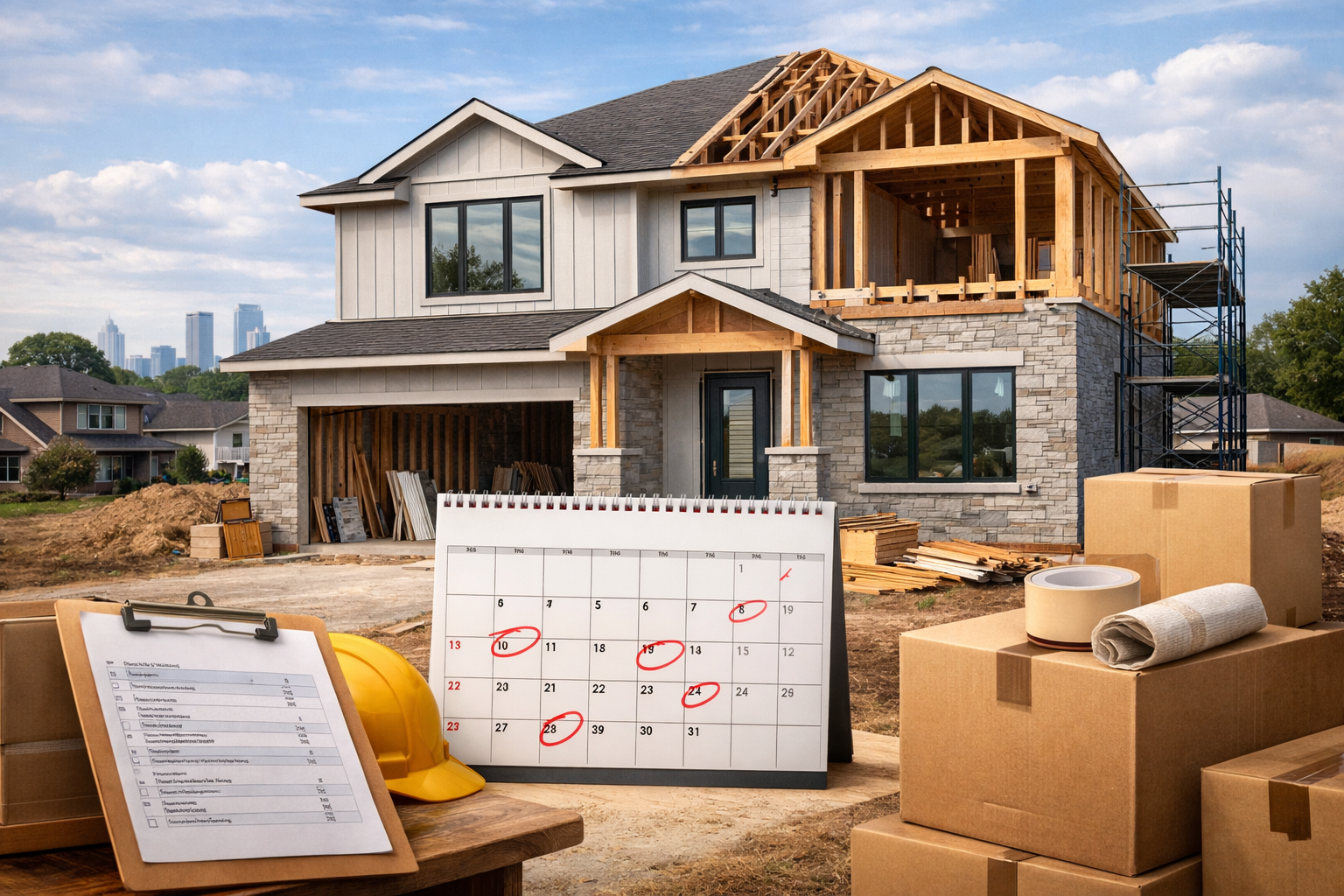
New construction delays can happen for many reasons, and buyers should review their builder contract, financing deadlines, housing plan, and communication process as early as possible. The most important first steps are to confirm what your signed agreement says about timing, ask how updates will be shared, coordinate with your lender on rate-lock and closing timelines, and make a backup plan for housing, storage, and moving logistics if the completion date shifts.
For Houston-area buyers, a delayed new construction home can affect much more than the move-in date. It can influence lease timing, interest-rate planning, utility setup, insurance start dates, inspections, final walkthrough scheduling, and the coordination required between the builder, lender, title company, and moving vendors. While delays are not always avoidable, buyers who stay organized and proactive are usually in a better position to manage the disruption and make informed decisions.
Why new construction homes can be delayed
Construction timelines are influenced by many moving parts, and delays do not always mean something has gone wrong in a dramatic way. In many cases, the schedule changes because one or more steps take longer than originally expected.
Common causes of construction delays
- Weather conditions: Heavy rain, storms, flooding, extreme heat, or other weather events can slow site work, concrete pours, roofing, exterior finishes, and inspections.
- Material availability: Windows, appliances, cabinets, garage doors, specialty finishes, and other components may arrive later than planned.
- Labor and trade scheduling: Framers, electricians, plumbers, HVAC crews, drywall teams, and other subcontractors may need to be rescheduled.
- Municipal inspections and permitting: Local approvals and inspection timing can affect when the next phase of work can begin.
- Change orders or design selections: Buyer-requested changes or delayed selections can sometimes extend the timeline.
- Site or infrastructure issues: Drainage, utility connections, road access, or community infrastructure work may affect progress.
- Final punch-list completion: Even when the home looks nearly finished, final corrections and documentation can still take time.
Because each home and community is different, buyers should avoid assuming that a verbal estimate or early milestone automatically guarantees a specific closing date.
Estimated completion dates vs. contract terms
One of the most important distinctions for buyers is the difference between an estimated completion date and the actual terms in the signed contract. Builders often provide projected timelines during the sales process, but the contract may describe timing differently and may include provisions related to delays, extensions, notice requirements, or closing windows.
Why this distinction matters
An estimate is often a planning tool. The contract is the document that governs the transaction. If the home is delayed, buyers should review the signed agreement carefully to understand:
- How completion or closing timing is described
- Whether the builder has extension rights under certain conditions
- What notice procedures apply
- Whether deposits, financing obligations, or buyer deadlines are affected
- What happens if the home is not completed by an expected timeframe
Because contract language varies, buyers should rely on their own signed documents and seek qualified professional guidance when needed. This article is for general information only and is not legal advice.
How builder timeline updates typically work
Builders often share progress updates through sales representatives, construction managers, email, phone calls, online portals, or scheduled milestone communications. The process can vary by builder and community.
What buyers should clarify early
- Who the primary point of contact is for timeline questions
- How often updates are typically provided
- Which milestones trigger a new estimated closing window
- Whether updates will be verbal, written, or both
- Who should be copied on important scheduling changes, including the lender if appropriate
Written confirmation can be especially helpful when coordinating a lease, movers, utility transfers, or lender deadlines.
Deposits and contract questions to review
If a new construction home is delayed, buyers often want to know how the delay affects earnest money, option fees if applicable, upgrade deposits, or other funds paid during the process. The answer depends on the signed agreement and the circumstances involved.
Key questions to review in your paperwork
- What deposits have been paid, and under what terms
- Whether any amounts are refundable or nonrefundable
- How delays are addressed in the contract
- Whether financing or closing deadlines are tied to specific dates
- What notices or documentation the buyer must provide if circumstances change
Rather than relying on assumptions, buyers should review the contract and verify questions directly with the builder and, when appropriate, a qualified real estate attorney or other professional advisor.
Planning for temporary housing and storage
A delayed completion date can create a gap between when buyers expected to move and when the home is actually ready. That is why a backup housing plan is worth discussing early, even if the build appears on schedule.
Temporary housing options to consider
- Month-to-month rental arrangements
- Short-term apartment or corporate housing
- Extended-stay lodging
- Staying with family or friends if practical
- Negotiating a lease extension at the current residence
Storage planning tips
- Price storage units before they are urgently needed
- Ask movers about temporary storage solutions
- Separate essential items from long-term packed items
- Keep important documents, medications, chargers, and daily necessities accessible
Even a short delay can become more manageable when buyers know where they can stay and how their belongings will be handled.
Lease timing and extension strategies
For buyers who are renting, lease timing is often one of the biggest stress points. If the home is delayed, the ideal solution may be an extension, a month-to-month arrangement, or another short-term housing plan.
Questions renters should ask early
- How much notice the landlord requires for renewal or extension requests
- Whether a short-term extension is available
- Whether month-to-month rent would change
- What penalties may apply if move-out dates shift
- Whether written confirmation is required for any lease modification
Because landlord policies vary, buyers should verify options directly and avoid waiting until the last minute if the builder timeline starts to move.
Moving-company coordination when dates are uncertain
Moving reservations can be harder to manage when the closing date is not firm. Some moving companies have limited flexibility, especially during peak seasons.
Smart moving coordination steps
- Ask movers about rescheduling policies before booking
- Confirm whether deposits are refundable or transferable
- Request written pricing for storage-in-transit if needed
- Avoid locking in nonflexible dates too early when possible
- Keep a list of backup vendors in case availability changes
Buyers who understand cancellation and rescheduling terms ahead of time may have more options if the timeline shifts.
Rate locks and lender communication
Construction delays can affect financing timelines, especially if a mortgage rate lock, credit documentation, employment verification, or other lender requirements are tied to a projected closing date.
What to discuss with your lender
- Whether the current rate lock extends far enough
- What extension options may exist, if any
- Whether additional fees or documentation could apply
- When updated pay stubs, bank statements, or other items may be needed
- How the lender wants to receive revised builder timelines
Loan programs and lender policies differ, so buyers should confirm details directly with their lender and avoid assuming that an original financing timeline will automatically remain unchanged.
Appraisal and closing timing
In many transactions, the appraisal and final loan approval depend on the home reaching the right stage of completion. If construction is delayed, appraisal scheduling and closing preparation may need to move as well.
Important timing considerations
- The home may need to meet certain completion standards before appraisal or final review
- Closing disclosures and lender timelines may shift if the closing date changes
- Title and escrow scheduling may need to be updated
- Final figures can change if the closing date moves into a different tax, insurance, or prepaid-interest period
Buyers should stay in close contact with both the lender and title company so everyone is working from the most current timeline available.
Inspections and final walkthroughs
Delays can also affect inspection scheduling, reinspection timing, and the final walkthrough. Even when a home is close to completion, buyers should confirm when these steps are expected to occur and what standards must be met before closing.
What buyers should verify
- Whether independent inspections are permitted under the contract and community rules
- When pre-drywall, phase, or final inspections should be scheduled if applicable
- How repair items will be documented and communicated
- When the final walkthrough is expected
- What must be completed before closing versus after closing, if allowed by the agreement
Inspection rights and procedures vary, so buyers should review their contract and coordinate with the builder and inspector accordingly.
Utilities and insurance timing
Utility transfers and homeowners insurance are often timed around the expected closing date. If the home is delayed, those arrangements may need to be adjusted.
Utility and insurance checklist
- Confirm when utility accounts should be opened or transferred
- Ask whether any utility providers require advance scheduling
- Verify the effective date for homeowners insurance with the insurer and lender
- Check whether policy documents need to be reissued if the closing date changes
- Keep records of confirmation numbers, contacts, and revised dates
Starting utilities or insurance too early or too late can create avoidable complications, so timing should be confirmed with the relevant providers.
Property taxes, HOA, MUD, and PID considerations in the Houston area
Houston-area buyers may also need to understand community-specific costs and timing considerations, especially in neighborhoods with homeowners associations, municipal utility districts (MUDs), public improvement districts (PIDs), or similar assessments where applicable.
Why these details matter
- Closing dates can affect prepaid items and prorations
- Community fees or transfer-related charges may need to be confirmed before closing
- Tax estimates on new construction may differ from future assessed values
- Utility district or improvement district obligations may be disclosed in separate documents
Because tax and assessment issues are highly specific, buyers should review builder disclosures, title documents, lender estimates, and guidance from qualified tax or legal professionals rather than relying on general assumptions.
What to document if your home is delayed
Good documentation can help buyers stay organized and reduce confusion when multiple parties are involved.
Keep records of the following
- Signed contract, addenda, and disclosure documents
- Emails and written timeline updates from the builder
- Lender communications about rate locks and closing requirements
- Lease terms, extension requests, and landlord responses
- Moving reservations, deposits, and rescheduling policies
- Insurance quotes, utility setup confirmations, and title communications
- Inspection reports, walkthrough notes, and repair lists
A simple folder system, spreadsheet, or timeline tracker can make it easier to compare dates and follow up efficiently.
Questions to ask the builder
- What is the current estimated completion window?
- What milestones still need to be completed before closing?
- How will future timeline changes be communicated?
- Are there any known material, labor, inspection, or utility issues affecting the schedule?
- When should the buyer coordinate inspections, walkthroughs, and utility setup?
- What contract provisions should the buyer review regarding delays and closing timing?
Questions to ask the lender
- How does the revised timeline affect the loan process?
- Does the current rate lock still work for the projected closing date?
- What extension or update options may be available?
- Will any documents need to be refreshed before closing?
- When should the appraisal and final underwriting steps be scheduled?
- How should builder timeline updates be shared with the loan team?
Practical delay-response checklist
- Review the signed contract. Confirm how timing, delays, notices, and deposits are addressed.
- Request an updated timeline in writing. Ask the builder for the latest estimated completion and closing window.
- Notify the lender. Confirm how the delay affects the rate lock, underwriting timeline, and required documents.
- Evaluate your housing plan. Review lease deadlines, extension options, temporary housing, and storage needs.
- Check moving arrangements. Review rescheduling terms, deposits, and backup options.
- Reconfirm inspections and walkthrough timing. Adjust scheduling based on the latest construction status.
- Update utilities and insurance timing. Verify effective dates and setup requirements.
- Organize documentation. Save emails, notices, receipts, and revised dates in one place.
- Verify closing coordination. Stay aligned with the builder, lender, title company, insurer, landlord, and any other key parties.
- Seek qualified advice when needed. For legal, tax, insurance, or financing questions, consult the appropriate professionals.
FAQ: New construction delays for Houston buyers
Can a new construction closing date change?
Yes. New construction closing dates can change if construction, inspections, materials, labor, utilities, or other steps take longer than expected. Buyers should review their signed contract and confirm the latest timeline directly with the builder and lender.
What should I do first if my new build is delayed?
Start by reviewing your contract, requesting an updated timeline in writing, and contacting your lender. Then evaluate your lease, temporary housing, moving schedule, and other time-sensitive arrangements.
Will a delay affect my mortgage rate lock?
It can. Rate-lock impacts depend on the lender, loan program, and timing involved. Buyers should ask the lender whether the current lock still works and what options may be available if the closing date moves.
Can I schedule movers before the home is finished?
You can, but flexibility matters. Before booking, ask about rescheduling policies, deposits, and storage options in case the move date changes.
Do delays change inspection and walkthrough timing?
Often, yes. Inspection and walkthrough timing usually depends on the stage of completion. Buyers should coordinate these steps based on the builder's latest schedule and any contract requirements.
Should I rely on an estimated completion date?
Estimated dates are useful for planning, but buyers should compare them with the actual contract terms and verify updates in writing. The signed agreement is the key document to review.
Final thoughts
A delayed new construction home does not automatically mean the transaction is falling apart, but it does mean buyers should shift into planning mode quickly. The most effective approach is to review the signed contract, confirm the latest builder timeline, communicate early with the lender, and create a practical backup plan for housing, moving, utilities, and closing logistics.
Because every contract, lender, property, and community is different, buyers should verify their options directly with the builder, lender, title company, insurer, landlord, and any qualified legal, tax, or financial professionals involved in the transaction.
Visit our website here
Go to our YouTube Channel Here
Call or Contact us:
832-905-9501
mflores@vantagerec.com
Vantage Real Estate Group Powered by PLACE

Michael Flores
Owner/Lead Agent | Vantage Real Estate Group | Keller Williams Signature Realty
or another way